Tattoo Shop Insurance: Policies, Costs, and State Requirements
Tattoo shop insurance is a package of coverages-typically general liability, professional liability, commercial property, and workers’ compensation-that protects a tattoo studio against client injury claims, allegations of faulty work, equipment loss, and employee injuries. No single policy covers all four risks, so most shops combine them into a bundled plan.
Need
Business Insurance ?
Get a Quote
Whether you legally need coverage depends on your state and your staffing. Most states tie insurance directly to your tattoo establishment license, and any shop with W-2 employees will trigger a workers’ compensation mandate.
Below is a breakdown of each coverage type, realistic cost ranges, how state rules work, and the process for getting a policy in force.
What Insurance a Tattoo Shop Needs to Operate Legally
Legal minimums vary by jurisdiction, but the practical baseline for a compliant, financially protected tattoo shop includes four coverage types. Some are legally mandated; others are required by your landlord or by the local health department as a condition of licensing.
- General liability, often required to sign a commercial lease and frequently expected at license renewal.
- Professional liability (malpractice), not always legally mandated, but the coverage that responds to the claims tattoo artists actually face.
- Commercial property, protects machines, furniture, and improvements; usually required by the lease.
- Workers’ compensation, legally required in nearly every state once you have employees.
If you operate solo as an independent artist renting a booth, your requirements shrink but do not disappear. Review the broader landscape in this guide to small business insurance policies before you decide what to skip. Next step: pull your city or county health department’s tattoo establishment application and read the insurance clause directly.
General Liability Insurance for Tattoo Parlors
General liability covers third-party bodily injury and property damage that happens on your premises but is unrelated to the tattooing itself-a client slipping on a wet floor, or a waiting-room visitor tripping over a cable. It does not cover claims about the tattoo you performed; that is professional liability’s job.
Standard limits are $1 million per occurrence and $2 million aggregate, which is also the limit most commercial landlords demand in a certificate of insurance. A general liability policy also typically includes products-completed operations and personal/advertising injury coverage.
For a deeper walkthrough of premises coverage tailored to studios, see this breakdown of general liability for tattoo shops. Many shops fold general liability into a Business Owners Policy (BOP), which bundles it with property coverage at a lower combined premium than buying each separately.
Professional Liability (Malpractice) Coverage for Tattoo Artists
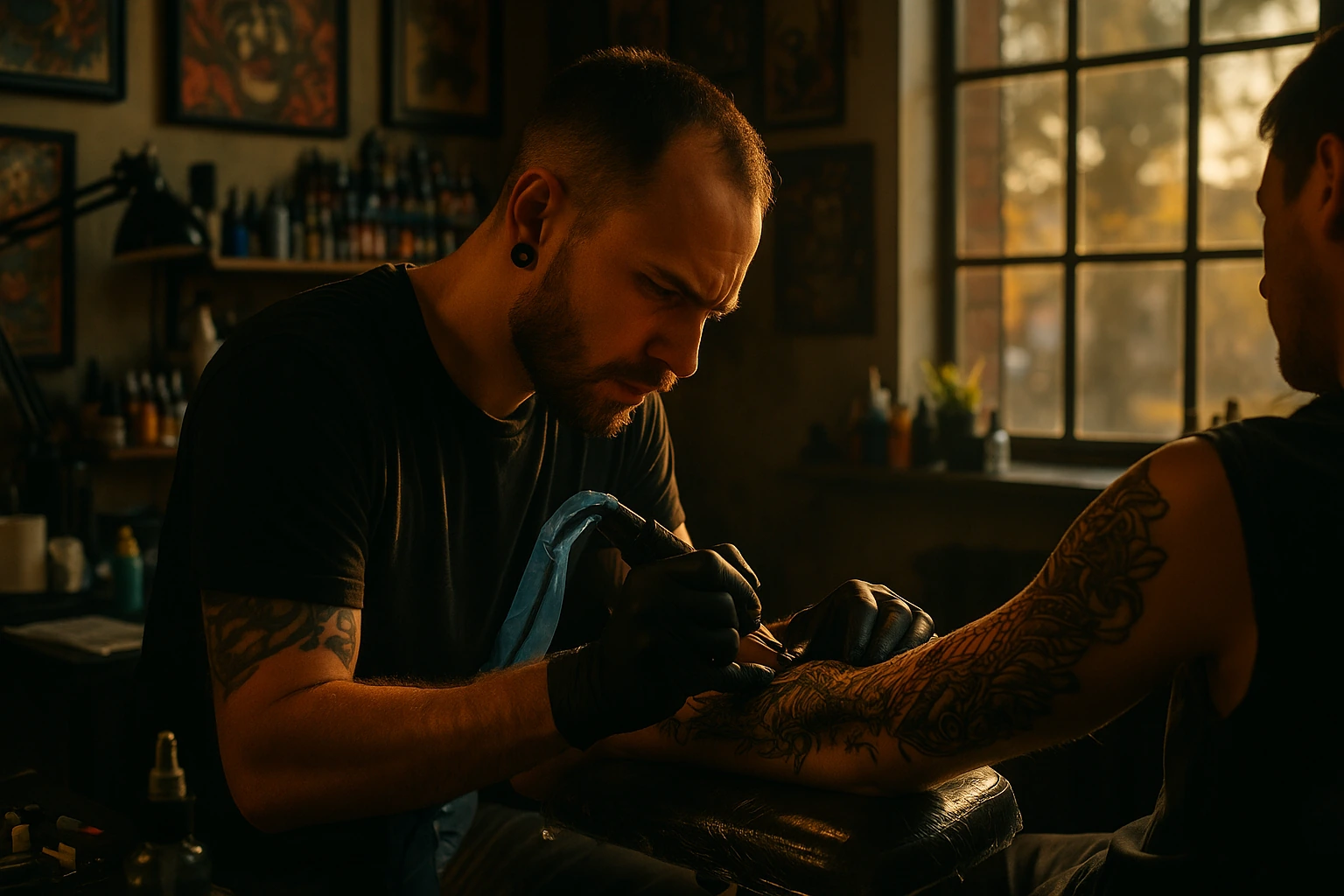
Professional liability responds to claims arising from the actual service: infections, allergic reactions to ink, blowouts, spelling errors, or a client alleging the finished tattoo differs from what was agreed. This is the coverage general liability explicitly excludes, and it is the one most likely to be triggered in a tattoo business.
This line is sometimes sold as Errors and Omissions Insurance (E&O), and some carriers refer to it as tattoo malpractice or professional liability-the underlying coverage is the same. Watch the policy trigger closely:
- Occurrence policies respond to incidents that happen during the policy period, even if the claim is filed years later.
- Claims-made policies only respond if both the incident and the claim occur while the policy (or its retroactive date) is active.
- Coverage extensions often add cover for cosmetic tattooing, piercing, or microblading-confirm each service you offer is listed.
If you switch carriers on a claims-made policy, buy tail coverage so gaps in the retroactive date don’t leave old work uninsured.
Property Insurance for Tattoo Equipment and Studio
Commercial property insurance covers your tattoo machines, power supplies, autoclaves, furniture, computers, and tenant improvements against fire, theft, vandalism, and covered water damage. Business personal property in a small studio commonly runs $20,000 to $75,000 in replacement value-inventory your gear before you set a limit.
Property policies typically cover equipment only while it sits at the insured address. If you travel to conventions or guest-spot at other studios, add Tools and Equipment Insurance, an inland marine form that follows your gear off-premises.
Shops that use a wrapped van or supply vehicle for conventions should also carry commercial auto insurance, since a personal auto policy will deny a claim on a vehicle used for business. Next step: photograph every machine and keep serial numbers in a cloud folder to speed any future property claim.
Workers’ Compensation for Tattoo Shops With Employees
Workers’ compensation covers medical bills and lost wages when an employee is injured on the job-a needlestick, a repetitive-strain injury, or a slip in the sterilization area. In nearly every U.S. state it is legally mandatory the moment you hire your first W-2 employee, and penalties for going without it include fines and stop-work orders.
Get Your Business Insurance:
Get a Quote
The classification hinges on employment status. Booth-renting artists paid as 1099 independent contractors generally aren’t your employees, but misclassifying a worker to dodge the premium is a common and costly audit finding. Compare the two situations in these guides to contractor workers’ comp and sole proprietor workers’ compensation.
For the mechanics of how premiums are rated by payroll and job class, read this overview of Workers’ Comp Insurance. Next step: confirm your state’s employee threshold-some require coverage at one employee, a few at three or more.
How Much Does Tattoo Shop Insurance Cost?
Costs depend on revenue, location, staff count, services offered, and chosen limits. The ranges below reflect typical small-studio pricing for standalone coverage; bundling into a BOP usually beats buying general liability and property separately.
| Coverage | Typical annual cost | Main cost drivers |
|---|---|---|
| General liability | $500-$1,200 | Revenue, foot traffic, limits |
| Professional liability | $500-$1,500 | Services offered, claims history |
| Commercial property / BOP | $750-$2,000 | Equipment value, building type |
| Workers’ compensation | Varies by payroll | Number of employees, state rates |
A solo artist often insures a full general + professional liability package for roughly $600-$1,000 per year. Multi-artist studios with employees and higher equipment values commonly land in the $2,000-$4,000 range once workers’ comp is added. Get at least three quotes-premiums for identical coverage regularly differ by hundreds of dollars.
State Licensing and Insurance Requirements for Tattoo Businesses
Tattoo regulation is handled at the state and local level, so requirements differ sharply by jurisdiction. Most states require an establishment license from the health department plus individual artist permits, and many attach an insurance condition to one or both.
- Insurance-linked licensing, some states or counties require proof of general or professional liability before issuing an establishment license.
- Bloodborne pathogen compliance, nearly all jurisdictions require documented sterilization and pathogen training, which insurers also expect.
- Workers’ comp verification, states cross-check comp coverage at license renewal when payroll is reported.
Because the patchwork resembles the trades, the methodology in this 50-state insurance requirements report is a useful model for how to research your own state. Next step: call your local health department-county rules often exceed state minimums.
Get Your Business Insurance:
Get a Quote
How to Get Tattoo Shop Insurance: Providers and Process
You can buy tattoo shop insurance through an independent agent, a broker specializing in body-art risks, or directly from carriers that offer online quotes. Specialty brokers usually secure broader professional liability wording because they understand the exposure.
- Inventory your equipment, annual revenue, employee count, and every service you offer (including piercing or cosmetic tattooing).
- Decide on limits-$1M/$2M is the market standard for both liability lines.
- Request quotes from at least three sources and compare exclusions, not just price.
- Verify the professional liability trigger (occurrence vs. claims-made) and confirm the retroactive date.
- Bind coverage and download your certificate of insurance for your landlord and license renewal.
Understanding why documentation matters is covered in this piece on why clients require proof of insurance. Next step: gather your equipment inventory and revenue figures so your first quote request takes minutes rather than days.
Frequently Asked Questions
Is tattoo shop insurance legally required?
It depends on your state and whether you have employees, but workers’ compensation is legally mandatory in nearly every state once you hire staff.
- General liability is often required by your commercial lease.
- Some health departments require liability proof to issue an establishment license.
- Review the full spectrum in this guide to common business policies.
Does general liability cover a tattoo infection claim?
No-general liability covers premises injuries, while an infection or reaction claim falls under professional liability.
- General liability handles slips, trips, and third-party property damage.
- Infections, blowouts, and allergic reactions require malpractice coverage.
- See the coverage split in this general liability breakdown.
Do booth renters need their own insurance?
Yes-independent artists renting a booth are usually not covered by the shop’s policy and need their own liability coverage.
- Shop owners often require booth renters to carry proof of coverage.
- Solo artists still face malpractice and equipment exposure.
- Compare options in this guide to independent contractor insurance.
How is workers’ comp priced for a tattoo shop?
Workers’ comp premiums are calculated from your payroll multiplied by a state-set rate for your job classification.
- More employees and higher payroll increase the premium.
- Misclassifying employees as contractors triggers audit penalties.
- Learn the rating mechanics in this workers’ comp overview.
Can I bundle my tattoo shop coverages?
Yes-a Business Owners Policy combines general liability and property coverage at a lower combined cost than separate policies.
- A BOP usually excludes professional liability, which you add separately.
- Workers’ comp is always a standalone policy.
- See how bundling works in this Business Owners Policy guide.
Putting Your Coverage Together
A protected tattoo shop layers four coverages: general liability for premises accidents, professional liability for the work itself, property (or a BOP) for equipment, and workers’ compensation once you employ staff. The exact legal minimum comes down to your state’s licensing rules and your staffing model, so verify both with your local health department before you buy.
Price varies widely-a solo artist may spend under $1,000 a year while a staffed studio can exceed $3,000 once comp is added. Inventory your equipment and revenue, request three quotes, compare exclusions rather than headline price, and confirm your professional liability trigger before binding. Then download your certificate of insurance so it’s ready for your landlord and your next license renewal.