Animal Care Business Insurance Requirements Explained: What Every Pet Pro Needs
Animal care business insurance requirements explained in one sentence: nearly every pet business needs general liability plus care, custody, and control (CCC) coverage, and if you have employees, workers’ compensation is typically mandated by state law.
Need
Business Insurance ?
Get a Quote
The exact mix depends on what you do, grooming, boarding, training, or mobile services each carry distinct risks. Licensing boards and booking platforms often set minimum coverage limits you must meet before you can legally operate or accept clients.
Below is a practical breakdown of what each type of pet professional needs, how state and local rules factor in, and how to confirm your policy actually satisfies the people who require it.
Why Every Animal Care Business Needs General Liability and CCC Coverage
General liability is the foundation of animal care business insurance. It covers third-party bodily injury and property damage, for example, a dog you’re walking bites a passerby, or you knock over a customer’s antique vase during a home visit.
What general liability does not cover is injury to the animals in your care. That gap is exactly why care, custody, and control coverage exists.
CCC coverage pays for veterinary bills, replacement value, or legal costs when a pet is injured, becomes ill, escapes, or dies while under your supervision. Standard general liability policies specifically exclude animals you’re paid to look after, so without CCC you’re personally exposed.
What Each Coverage Actually Pays For
- General liability: a client trips over grooming equipment, or your mobile van damages a driveway.
- Care, custody, and control: a boarded dog escapes the play yard, or a cat has a bad reaction to a flea treatment you applied.
- Professional liability: a training program fails to correct aggression and the client sues over the outcome.
Most insurers bundle these into a pet business package rather than selling them separately. Reviewing the broader landscape of common small business insurance policies helps you understand which add-ons genuinely apply to animal care work.
A typical entry-level general liability policy for a pet professional carries a $1 million per-occurrence limit and a $2 million aggregate. CCC limits are usually set per-animal and per-incident, so confirm they’re high enough to cover the value of the pets you handle.
Insurance Requirements by Animal Care Business Type
The animals and settings you work with change your risk profile. Here’s how requirements shift across the four most common animal care models.
Grooming
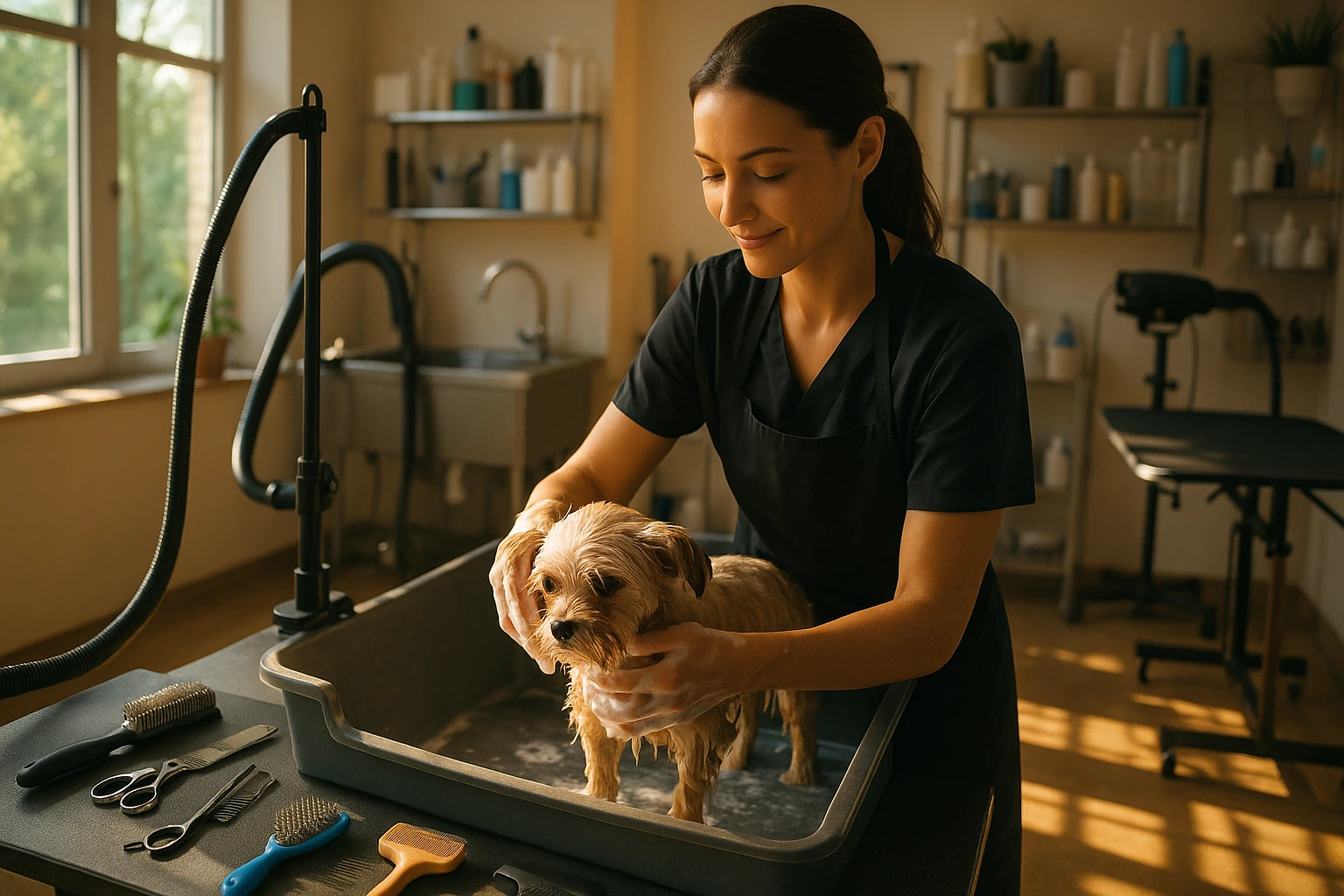
Groomers face a high rate of accidental injury claims, nicks from clippers, quicked nails, or a dog jumping off a raised table. CCC coverage is non-negotiable here because the animal is physically restrained and handled with sharp tools.
Add tools and equipment coverage if you own expensive dryers, tables, or clipper sets, since general liability won’t replace your own gear.
Boarding and Daycare
Boarding carries the highest exposure of any pet business because animals are on your premises overnight and often in groups. Dog fights, illness transmission, and escapes are common claim drivers.
You’ll typically need higher CCC limits, commercial property coverage for your facility, and often a specific “animal bailee” endorsement. Many boarding operators also carry business interruption coverage in case an outbreak forces a temporary closure.
Training
Trainers rely heavily on professional liability alongside general liability and CCC. A client may claim your methods worsened a behavioral issue or caused an injury during a session.
If you train in clients’ homes or public spaces, confirm your policy follows you off-premises rather than covering only a fixed location.
Get Your Business Insurance:
Get a Quote
Mobile Services and Pet Sitting
Mobile groomers and in-home pet sitters need a bonding and key coverage layer most fixed businesses skip. Bonding protects clients against theft, and lost-key coverage handles rekeying costs when you’re entrusted with home access.
Mobile groomers who operate from a van almost always need commercial auto, a personal policy will deny a claim the moment it learns the vehicle was used for business. The difference between personal and commercial auto insurance is the single most misunderstood gap for van-based pet pros.
| Business Type | Core Coverages Needed | Highest Risk |
|---|---|---|
| Grooming | GL, CCC, tools & equipment | Accidental animal injury |
| Boarding/Daycare | GL, CCC, property, animal bailee | Fights, illness, escape |
| Training | GL, CCC, professional liability | Behavioral outcome claims |
| Mobile/Sitting | GL, CCC, bonding, commercial auto | Theft, key loss, vehicle accidents |
State and Local Licensing Rules That Mandate Insurance
Insurance isn’t only a business decision, in many jurisdictions it’s a legal condition of your license. Requirements vary widely because animal care is regulated at the state, county, and city level rather than federally.
Boarding kennels and doggy daycares face the strictest rules. Many states require a kennel license that names proof of liability insurance as a condition of approval, along with facility inspections.
Where Insurance Requirements Commonly Appear
- Kennel and boarding permits: often require a minimum general liability limit before the license is issued.
- Home-based business permits: some cities mandate liability coverage for pet businesses run from a residence.
- Commercial lease clauses: landlords frequently require you to carry liability insurance and name them as an additional insured.
- Mobile vendor permits: municipalities may require both liability and commercial auto proof for van-based services.
Because rules differ so sharply by location, confirm the exact limits with your city and county before you assume a standard policy is enough. The way requirements shift across jurisdictions mirrors what happens with trades, the state insurance requirements for contractors report is a useful illustration of how much a single line of business can vary from one state to the next.
If you’re weighing coverage against a tight budget, understand that skipping a licensing-mandated policy can void your permit entirely. Comparing affordable liability coverage options is smarter than going uninsured and risking a shutdown.
Get Your Business Insurance:
Get a Quote
Workers’ Compensation and Verifying Your Policy Meets Requirements
The moment you bring on help, your insurance obligations change. Workers’ compensation is legally required in most states as soon as you hire your first employee, and the threshold is often a single worker.
Workers’ comp covers medical bills and lost wages if an employee is injured on the job, which is a real risk when staff handle unpredictable animals. Dog bites and lifting injuries are the most frequent claims in this field.
Employees vs. Subcontractors
Many pet businesses assume hiring “independent contractors” removes the workers’ comp requirement. Misclassification is one of the costliest mistakes an animal care owner can make, because state auditors look at how you direct the work, not the label on the agreement.
If a subcontractor lacks their own coverage, your insurer may charge you premium for them at audit as though they were an employee. Even solo operators sometimes carry a policy voluntarily, the case for sole proprietor workers compensation insurance is stronger than most owners expect when their income depends on being physically able to work.
How to Verify Your Policy Meets Client and Platform Requirements
Booking platforms like Rover and Wag, corporate clients, and apartment complexes often require proof of insurance with specific limits before you can work. Follow these steps to confirm you actually qualify.
- Request your Certificate of Insurance (COI) from your broker, this is the standard document everyone asks for.
- Match the required per-occurrence and aggregate limits exactly; a $500,000 policy fails a $1 million requirement.
- Confirm CCC is explicitly listed, since some platforms require it separately from general liability.
- Add any required “additional insured” party, such as a landlord or property manager, to the policy.
- Check the effective dates so your COI doesn’t expire mid-contract.
Before you commit, gather and compare business insurance quotes from at least three insurers on identical limits so you’re comparing coverage, not just price. Understanding your small business insurance deductible matters too, because a low premium with a high deductible can leave you paying most of a claim yourself.
Frequently Asked Questions
Do I need insurance for a small home-based pet sitting business?
Yes, even solo home-based pet sitters typically need general liability and CCC coverage.
- General liability protects you if a pet or client is injured during a visit.
- CCC covers vet bills if an animal is hurt in your care.
- Add bonding to reassure clients who give you home access.
- Check your city’s home-based business permit rules, which mirror many small business policy requirements.
What is care, custody, and control coverage?
CCC coverage pays for injury, illness, escape, or death of an animal while it’s under your professional supervision.
- It fills the gap standard general liability leaves by excluding pets you’re paid to handle.
- Limits are usually set per-animal and per-incident.
- Groomers and boarders need the highest CCC limits.
- Confirm it appears explicitly on your list of covered claim types.
When am I legally required to carry workers’ compensation?
Most states require workers’ comp the moment you hire your first employee, often with a one-worker threshold.
- Coverage handles medical costs and lost wages for on-the-job injuries.
- Misclassifying employees as contractors can trigger penalties at audit.
- Uninsured subcontractors may be charged to your premium.
- Solo owners can consider workers comp for sole proprietors voluntarily.
Do mobile groomers need commercial auto insurance?
Yes, mobile groomers operating from a van need commercial auto because personal policies deny business-use claims.
- A personal auto insurer can void coverage once it learns the vehicle is used commercially.
- Commercial auto covers accidents, equipment inside the van, and liability on the road.
- Review the commercial versus personal auto distinction before you rely on your existing policy.
- Some municipalities require proof of commercial auto for mobile vendor permits.
How much does animal care business insurance typically cost?
Cost varies widely by business type, coverage limits, location, and payroll, so there’s no single flat rate.
- Boarding facilities pay more than solo dog walkers due to higher exposure.
- Higher CCC limits and property coverage raise the premium.
- Bundling coverages in a package is usually cheaper than buying them separately.
- Compare identical limits across insurers using insurance quotes to find your best rate.
What proof of insurance will clients and platforms ask for?
Most require a Certificate of Insurance showing your coverage types, limits, and effective dates.
- Match required per-occurrence and aggregate limits exactly.
- Ensure CCC is listed if the platform requires it separately.
- Add landlords or property managers as additional insured when requested.
- Understand which classes of insurance business apply so your COI reflects the right coverage.
Getting Your Coverage Right Before You Open the Doors
Every animal care business needs general liability and CCC coverage at a minimum, with grooming, boarding, training, and mobile services each layering on their own specialized protections.
State and local licensing rules frequently make insurance a legal condition of operating, and workers’ compensation becomes mandatory the moment you hire.
Confirm your limits against every client, platform, and landlord requirement using an up-to-date Certificate of Insurance. Start by comparing quotes on identical coverage, then build the exact package your specific pet business, and the people who trust you with their animals, actually needs.